
Detailed history of Toruń
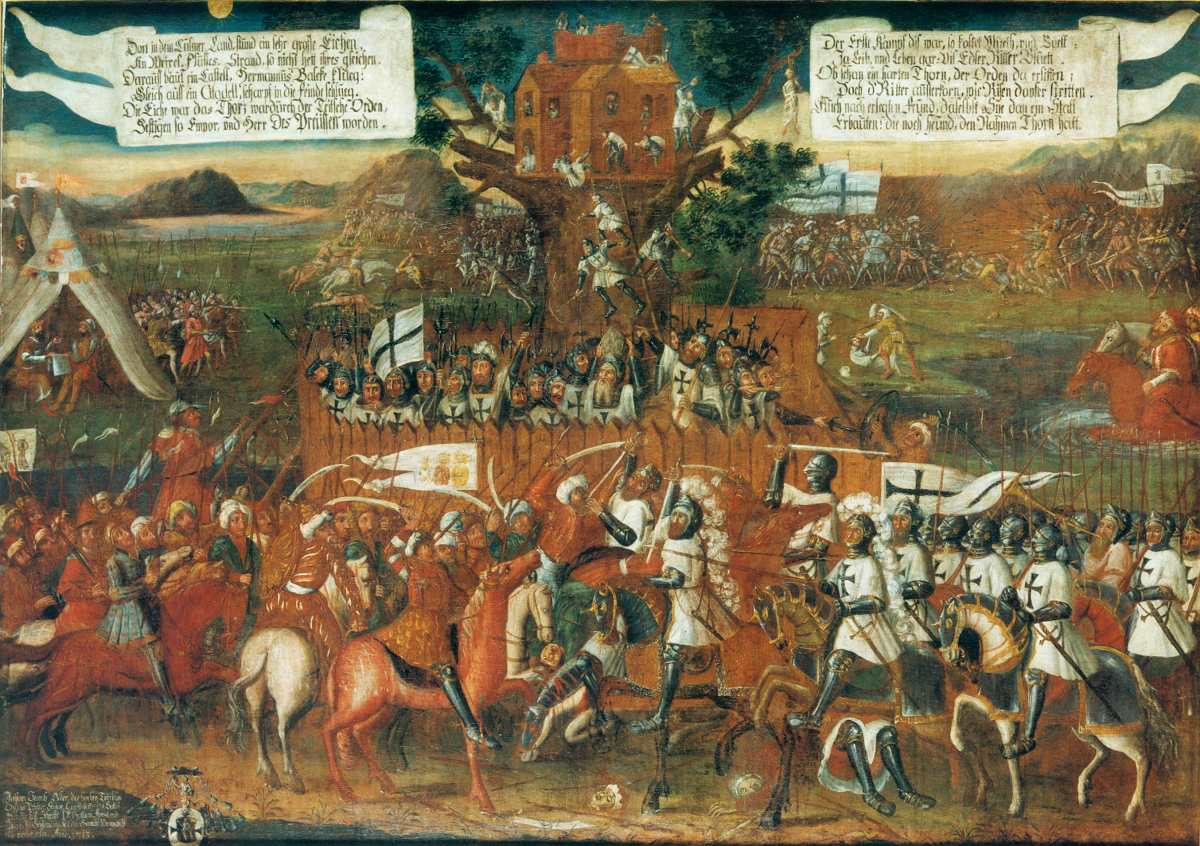 Founded by the Teutonic Knights in 1231 and granted its charter of incorporation under the ‘Law of Chełmno’ year later, Toruń remained under the Teutonic rule for over two centuries, i.e. until the outbreak of the Thirteen Years’ War between Poland and The Teutonic Order in 1454.
It was in Toruń that the Teutonic Knights established their first fortified base on the northern Vistula bank. It was in Toruń that the first Teutonic castle was built there, the seat of Komtur (the Commander), different from other castles built later in respect of its layout. It was from Toruń that the Teutonic Knights began their conquest of pagan Prussia and gradually built a powerful monastic state. In 1243, in the Franciscan monastery in Toruń a synod was held, where a papal bull on establishing four new dioceses in the area was issued. Until the end of the fourteenth century, the city, with a population of 13 thousand, was the biggest and the most important inland Hanseatic port, the major commercial centre for trade between Poland and overseas countries, and a cultural and artistic centre of the Teutonic state. Later, the roles were taken over by Gdańsk. Old Toruń, by virtue of its seniority and leading position in the Hanseatic League, always had precedence over all Prussian cities in Pomerania, and its Old City Hall housed the archives of the 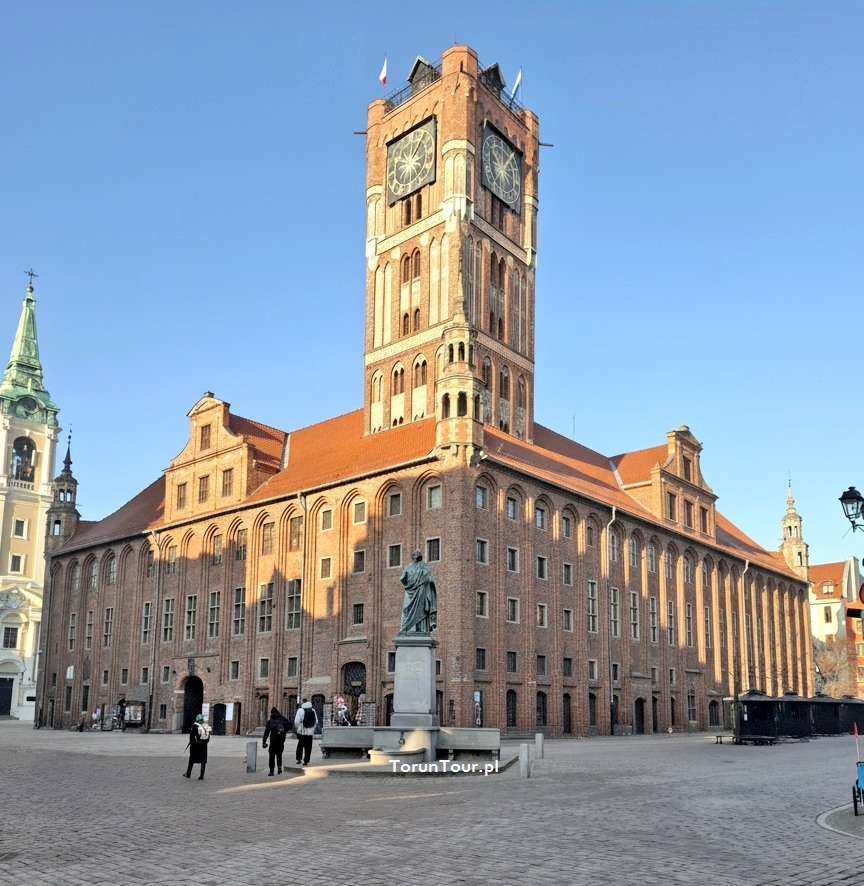 Prussian Quarter. All the monumental and most important historic buildings date back to this period, including the Gothic Old City Town Hall, three large Gothic churches, fortifications (walls, towers, gates) and the largest complex of burgher architecture in Poland, comprising dozens of Gothic townsmen's residences with a typical interior layout. (Today, the layout of a Hanseatic tenement building with storage facilities is best illustrated by Copernicus’ House).
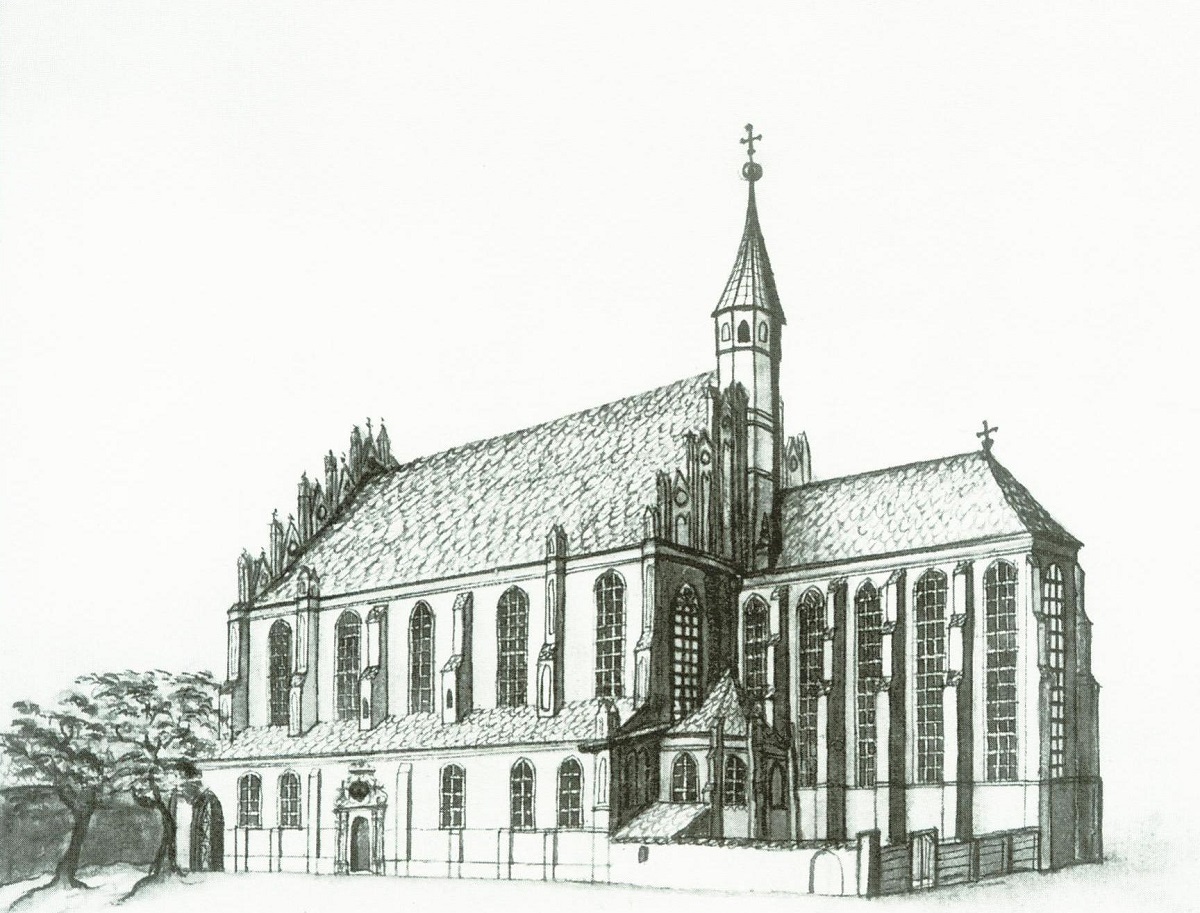
The dynamic growth of the city led to establishing another urban area, the New City of Toruń, as early as 1264. Moreover, numerous suburbs developed rapidly, the biggest of which, known as Chełmińskie Suburb, was located outside Chełmińska Gate, north of the Old City of Toruń. In the suburb, a suburban court and three Gothic churches were located, including St. George’s Church with the leprosarium, which was the oldest and biggest of them, St. Laurence’s Church and the Church of the Holy Cross. None of the churches survived, the first two being pulled down in the nineteenth century by the German authorities.
Although Toruń played one of the main economic and political roles in the Teutonic state, its rich residents, largely German, distanced themselves from the Teutonic Knights’ military undertakings from the very beginning and sought the protection of the Polish kings. Their membership in the Prussian League of 1440, the confederation of nobility and cities in which Toruń played a significant role, was the manifestation of their allegiance. It was the League’s Secret Council residing in Toruń that renounced its allegiance to the Teutonic Order in 1454 and sent the Prussian delegation to Krakow to announce the incorporation of Royal Prussia into the Kingdom of Poland, which in consequence led to the Thirteen Years’ War between Poland and the Teutonic Knights.
During the war, started by the attack on the Teutonic castle, Toruń was the headquarters of the Prussians and the Polish monarch, serving as the base for military operations. In effect, numerous foreign delegations led by papal legates visited Toruń to take on mediation roles. The affluent city for long continued to support the war financially, which resulted in the revolt by the burghers against the burden of allegedly excessive taxation in 1456. The riot was suppressed by the City Council (68 people were beheaded). The power of medieval Toruń was reflected in the amount of money the city allocated for military purposes. The amount spent on the war with the Teutonic Order reached 200,000 ‘grzywnas’ (a monetary unit used in Poland in the Middle Ages), which equalled the 80-year annual income of the capital city of Krakow and the 270-year annual income of Poznań!
 The war concluded in 1466 with the Second Treaty of Toruń which, among other things, put an end to the former Teutonic state; its western part formed so-called Royal Prussia (including Toruń, Gdańsk, Elbląg and Malbork), an autonomous province of the Kingdom of Poland with its own governing body, the Prussian Council (later the Prussian Diet). The province had its own currency minted since 1528 in the royal mint in Toruń, its own Treasury, tax system, jurisdiction, coat of arms and seal. Since then, Toruń, which had its former privileges confirmed and a number of new ones and a royal title granted by King Casimir Jagiellon (Kazimierz Jagiellończyk), became one of the three so-called Great Cities of Prussia and, beside Gdańsk and Elbląg, the most affluent city in the Polish lands, exceptional status - a large autonomy and a number of legal and political privileges enjoying. For this reason Toruń was referred to as the ‘independent burghers’ republic’. As the Prussian Council members, the patricians of Gdańsk and Toruń had the right to participate in the diets on a par with the Polish nobility. Three of the diets were held in Toruń (only the representatives of the privileged cities of Krakow, Poznań, Gdańsk, Vilnius and Toruń had the right to vote during the meetings).
In 1473, the city saw the birth of Nicolaus Copernicus.
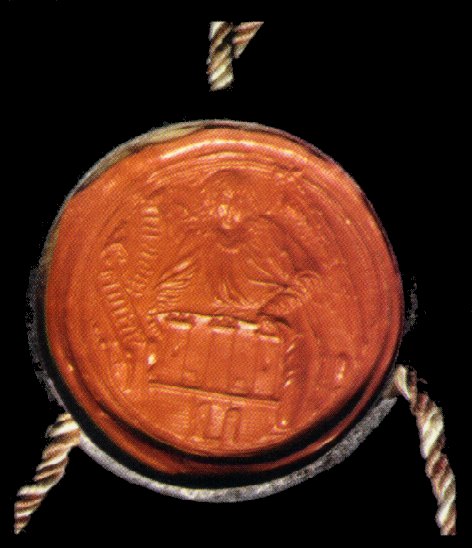 Toruń's ambition to achieve prestige was further fulfilled in 1506, when King Alexander Jagiellon (Aleksander Jagiellończyk) authorised the City Council to use the red seal, which was considered the privilege of the monarchs. In Toruń, it was regarded as an apparent gesture of appreciation and goodwill.
Long after the Second Treaty of Toruń (1466), the city was frequently visited by the Polish kings, residing in the Royal Chamber of the Old City Town Hall, also with regard to the question of the Teutonic Order. The Jagiellonian dynasty took a particular liking to the city, and King Casimir Jagiellon alone visited it sixteen times. In 1501, King John I Albert (Jan Olbracht) died during his stay in Toruń and his heart was laid in Toruń’s Cathedral. Beside the obvious benefits of Toruń’s good relations with Krakow, the royal visits were beneficial for the city also in terms of prestige and propaganda; for the affluent burghers, whose fortunes thrived, the visits provided the occasion to boast their splendour; thus, all the classes paraded before their monarch.
At the turn of the seventeenth century, the city, called then Queen of the Vistula, enjoyed its golden age for the second time in history. Once more, the city was teeming with merchants and wanderers, and one could hear the babel of foreign tongues emanating from the streets. Owing to three big international fairs organised under the privilege granted by King Casimir Jagiellon in 1472, as well as the city’s extensive patrimony, Toruń ranked among the richest and most influential trade and art centres again. Kings were frequent guests in the city, which remodelled its buildings according to the then prevailing architectural fashions. The churches were filled with works of art by the most eminent artists and the burghers entertained artists, politicians and thinkers. Guild artists, who formed as many as fifty three guilds in the mid-seventeenth century, did not merely fulfil the local needs – their masterpieces went to Prussia and the rest of Poland.
In 1558, Toruń’s residents enjoyed religious liberty proclaimed by King Sigismund-Augustus (Zygmunt August), which sealed the victory of the Reformation in the city, now a large and important Protestant centre. The Protestants began to engage in cultural activities. The famous Protestant Academic Gymnasium of Toruń enjoyed the reputation of one of the best at the time, attracting students and scholars from the whole of central Europe. In 1595, Burgomaster Heinrich Stroband put forward the initiative of establishing a university.
It was the municipal gymnasium, founded in 1568 and converted into the Academic Gymnasium in 1594, that stimulated the cultural and academic life. The gymnasium boasted a number of renowned professors, who might easily win the recognition by other reputable universities. The building housed a library, which, according to the then sources, was a match for the most famous and biggest libraries in Europe; there was a printing house, dating back to 1581 (the previous one founded in 1568), in which numerous academic publications were printed including the first academic journal in the world, Institutio Literata, as well as the so-called ‘Ekonomia’, a dormitory.
The Academic Gymnasium competed with the rival Counter-Reformation Jesuit College, established in 1605.
Besides, Toruń with its assets was a well-developed industrial city. Some of its suburban industrial centres, such as those in Lubicz, Przysiek and Kaszownik, offered a number of products and services. There were, for example, breweries, paper mills, distilleries, tanneries, timber mills, fuller mills, copper forges, shipyards, etc. In the mid-seventeenth century, Toruń was nearly as big as the capital, then Warsaw, with a population of 15-20 thousand.
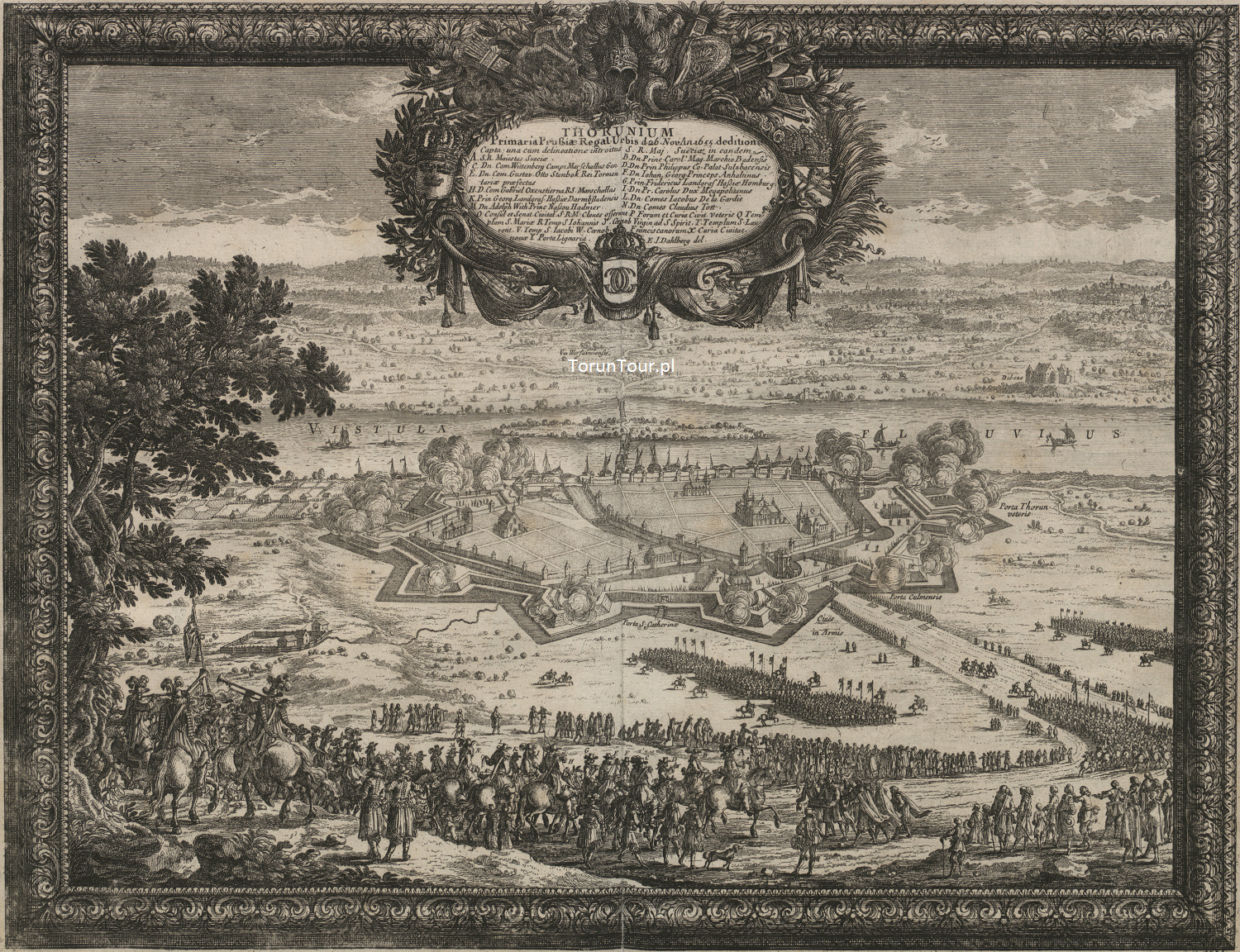 After nearly two centuries, good fortune deserted Toruń. A war against Sweden brought initially both success and… legends. Toruń’s success was withstanding the attack of the Swedish corps in 1629, heavily outnumbering the Polish troops. Toruń’s burghers, who enjoyed the royal privilege of having their own army, fought a heroic battle with the invaders. The legends included those about the Cat’s Head and the Swede. In 1658, Toruń was under the Swedish occupation, but the invaders wreaked the worst havoc in 1703, followed by the fall the city had never seen before.
The fortified city quickly recovered from the first devastating Swedish attack in 1629.
In 1636, following the death of King John I Albert in 1501, Toruń was in mourning again, watching Princess Anna Vasa, the Protestant sister of King Sigismund Vasa (Zygmunt III Waza), being ceremonially laid to rest in the Protestant Church of the Blessed Virgin Mary (the major Protestant church at the time).
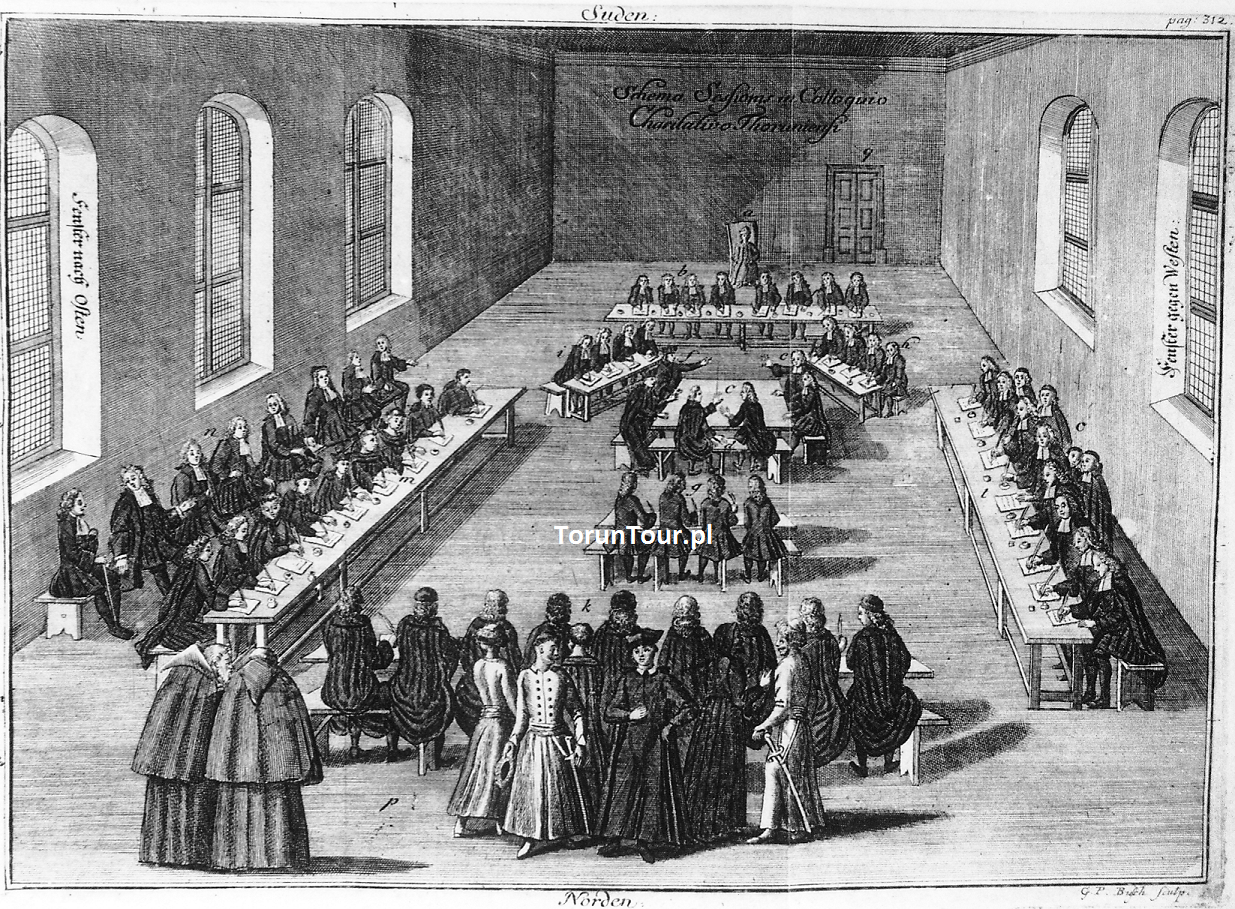 In August 1645, this great and prosperous city hosted Colloquium Charitatium, the meeting of eminent European theologians who came to Toruń to discuss their differences in brotherly atmosphere. Although the meeting failed to achieve its intended goal and no firm conclusions were met, it was one of the most famous and important events in the history of Toruń. The West in particular stood in awe of the event, and the originator of the idea, King Ladislas Vasa (Władysław IV Waza), won the title of an open-minded and tolerant monarch, while Toruń went down in history as the city of tolerance.
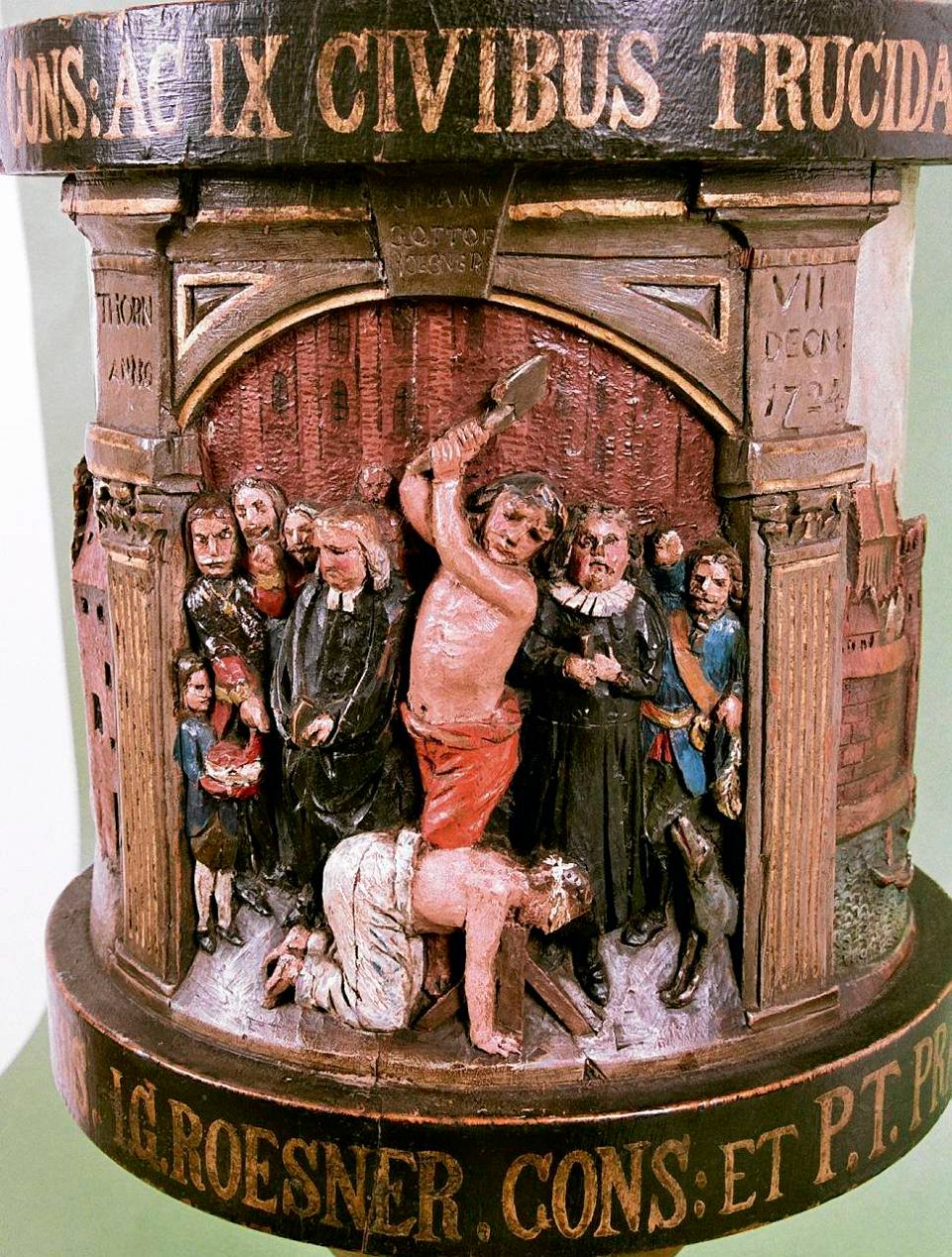 However, the religious differences between dominant Protestantism and Catholicism, coming back to life as a result of the Jesuit Counter-Reformation, became increasingly evident in the city. In 1724, the constantly growing tension resulted in the notorious ‘Tumult of Toruń’ (which is said to mark the end of the Protestant era in Toruń). It started with a seemingly harmless street fight between the Jesuit College students and those of the Protestant Academic Gymnasium. The skirmish ended with a dramatic finale - a special royal committee consisting of Catholics identified the perpetrators - Lutherans exclusively; fourteen were sentenced to death, of which ten, including Burgomaster Johann Gottfried Rösner, were decapitated in Toruń.
The far-reaching consequences of the Tumult of Toruń proved disastrous for the city: the nobility in the whole of the Republic boycotted Toruń’s merchants; the royal army, then Saxon, time after time plundered the city. What is more, the incidents nearly brought about a religious war in Europe. Toruń’s Evangelicals petitioned Protestant monarchs and, in effect, the hapless city received the support from the Kings of Denmark and England, the Russian Tsar and Frederick II of Prussia. Armed intervention seemed imminent. However, also due to the intensive demarche on the part of the royal and Vatican diplomacy, Warsaw won the support of Austria and Spain; preparations for the invasion on the Republic were discontinued. Otherwise, the partition of Poland might have taken place a few dozen years earlier…
Thus, Toruń’s notoriety in the Republic was huge even though its loyalty to its homeland rarely wavered.
The First Partition of the Republic of Poland-Lithuania in 1772 did not include Toruń and Gdańsk, the two important cities. After the Second Partition in 1793, Toruń was annexed by Prussia. As the only city demonstrating its allegiance to its homeland, though symbolically now, Toruń closed the city gates in protest. It had little effect as the Prussians forced the gates. On entering, they overturned the old order: no local policy, no burghers’ republic. Toruń’s residents knew they were losing their autonomy, yet they never suspected it would be permanent.
Soon after the First Partition, King Frederick II of Prussia and his successors pushed for the development of ‘their’ town of Bydgoszcz as an economic counterbalance to Toruń and Gdańsk, the two great and important cities which were still Polish. Thus, the growth of Bydgoszcz was encouraged, marked by establishing state-owned and private enterprises. Finally, the Bydgoski Canal was built - an important water transport route. Due to political considerations, the Prussians sought to hinder the development of Toruń - the city of stronger national identity than ‘germanized’ Bydgoszcz.
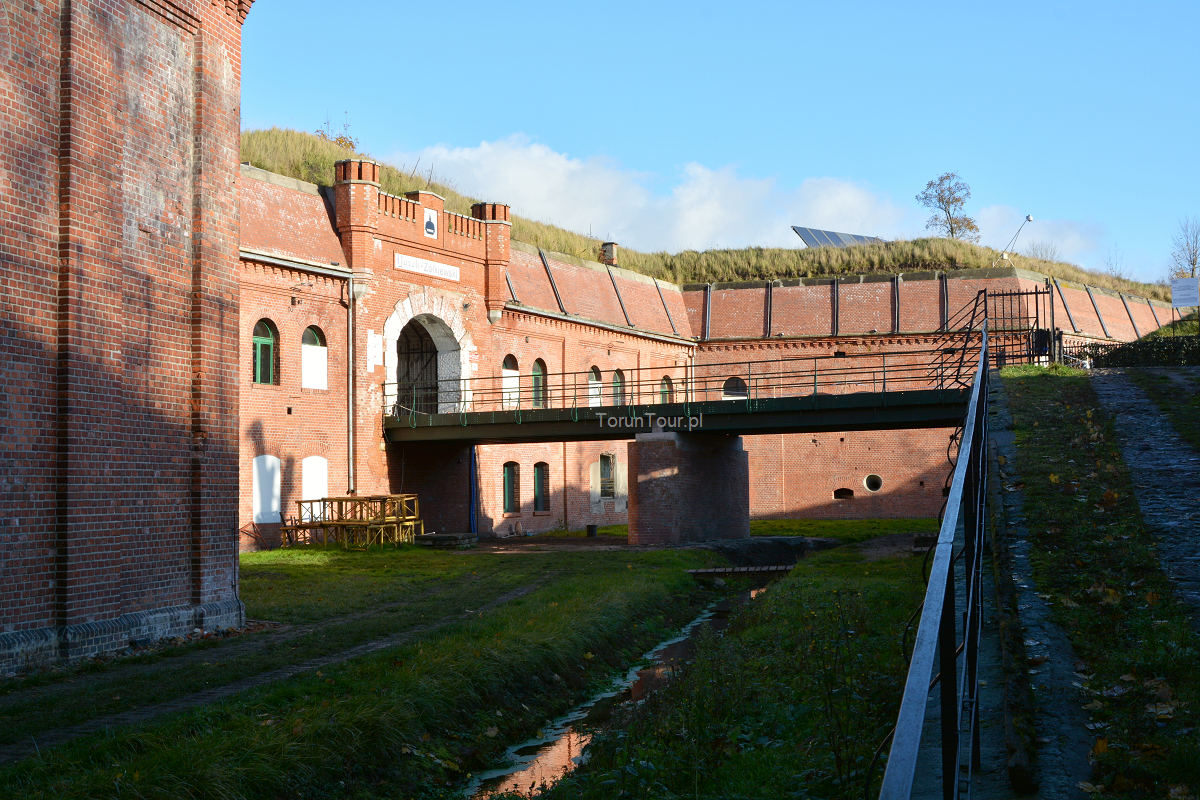 The hitherto merchant city, smelling of gingerbread, wine, cereal and herring, became a fortress on the border between Prussia and Russia. Then, the fortunes of the city were mixed: in December 1806, Napoleon’s army entered Toruń and the city for long served as a garrison and hospital, suffering much damage, loss and requisition. In 1807, the Duchy of Warsaw was established and in 1809 Toruń became the seat of its government and the so-called ‘grand city’ of the Duchy, on a par with the cities of Warsaw, Poznań and Kalisz. In the same year, for the second time in history, the city withstood attack on its own, now coming from Austria. In June 1812, Napoleon stopped in Toruń on his way to Moscow, exploring the city and searching for traces of Copernicus. Followed by the Russians, he returned to Toruń only one year later and defended the city with the Bavarians who came to his aid. In the Napoleonic Era, through Toruń marched hordes of predatory armies wreaking havoc and plundering the city. Toruń’s question was resolved conclusively at the Congress of Vienna in 1815. Toruń was ceded to Prussia which, after 1817, embarked on fortifying the city. By the end of the nineteenth century, Toruń had become a fortress of the first rank, one of the biggest in Europe, boasting a number of well-preserved historic buildings (>>>).
 Gradually, Toruń rose from the fall. The Prussians built barracks, a hospitals, fortifications, arsenals, stations, a post office, factories, a slaughterhouse, a printing house, and a court (yet it was also the Prussians that irretrievably damaged and pulled down a number of valuable historic buildings, including Gothic churches, tenements, palaces, medieval towers, gates and walls). They erected buildings in neo-Gothic style so that they would commemorate the Teutonic-German roots of this area. And they do. It can hardly escape notice that similar neo-Gothic red houses stand in Cologne, Frankfurt and Strasburg, while they do not, for example, in Włocławek, which is only 50 kilometres away.
Apart from architecture, the endeavours to give the city German character came to nothing. Toruń was a bastion of the Polish national consciousness in Pomerania, and the stronger the pressure of Germanization was, the stronger the sense of Polishness became. It was in Toruń that the Plebeian’s Union operated, preparing anti-Prussian rebellion of 1846, and it was in Toruń that the Polish newspaper, Gazeta Toruńska, was issued. In 1875, the Learned Society was founded, recognized for its fierce struggle against Germanization by all European countries. There were nearly forty Polish organisations in Toruń altogether!
The red and white flag was flown on the tower of the Old City Town Hall on 18 January 1920, concluding the 127-year captivity. The city became the capital of the Pomeranian administrative region in recognition of its struggle to retain its Polish identity and that of the whole of Pomerania in the Prussian Partition.
Soon the city saw the period of dynamic population growth (its population doubled in the inter-war period), accompanied by urban and architectural development.
In 1920-39, Toruń, as the centre of political life in Pomerania, escaped the excessive number of industrial chimneys and large concentration of labourers which, after the Second World War, proved to be pernicious in effect. Toruń lost its status as the capital of the province for the benefit of the city of Bydgoszcz, which, as it was argued, was more ‘proletariat-friendly’ and favoured the new communist authority. However, with a population of approximately 200 thousand, Toruń is currently the co-capital of the Kuiavia-Pomerania province, the seat of the Marshall and other provincial administration. It is also a big centre for industry, culture and academic life, with the biggest and oldest university in the north of Poland.