
Gingerbread of Toruń - Toruńskie Pierniki
| The earliest written records of Toruń's gingerbread craft date back to 1386 and mention a baker (or "cake maker" Kucheler) named Niclos Czan. However, gingerbread had been baked in Toruń since the 13th century. Gingerbread was made by bakers, sometimes called cake makers, and only later - gingerbread bakers. Gingerbread was also baked at the local Cistercian Benedictine monastery. As early as the 14th century, an unknown poet wrote a Latin poem entitled "On the Peppery Bread, or Gingerbread of Toruń," which extols the properties and virtues of gingerbread, which is especially invaluable "if you take a sip of vodka." |
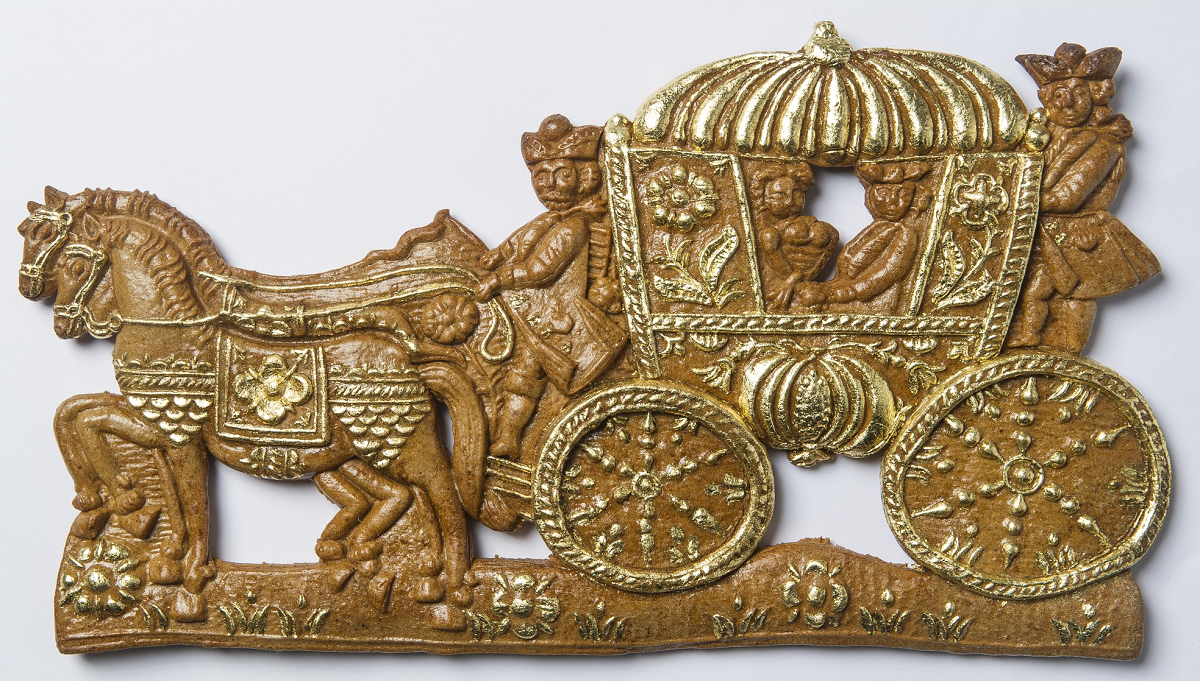
A decorative carriage drawn by horses - this is one of the particularly decorative and gilded gingerbreads of Toruń from the Baroque period. |
From the Orient to Toruń and around the worldWhat's that scent wafting through the alleys of Toruń's Old Town? The aroma of cardamom, clove, and anise fills your nostrils and arouses your curiosity. What is undoubtedly Toruń's most delicious export? Yes, Toruń smells of gingerbread! |
Toruń Gingerbread Guided Tour |
Why are gingerbreads associated with Toruń?Gingerbreads are a symbol of Toruń due to their long and rich history, dating back to the Middle Ages, and the importance they achieved in the city's economic and political life over the following centuries. Toruń, one of the most important trading centres in Hanseatic medieval Europe, gained fame for its gingerbread, which was prized both throughout the Polish-Lithuanian Commonwealth and abroad. Among the most important ingredients of gingerbread are spices (pepper, saffron, ginger, cloves, cinnamon, nutmeg, mace, anise, and others). At that time, only those of Far Eastern origin, traded via the Black Sea, were available. From there, they were delivered to Toruń, then to the Teutonic State, the Kingdom of Poland, and deep into Europe by Hanseatic merchants from Toruń. From the very beginning of Toruń's existence, as its new settlers, they maintained extensive and direct trade links with the Black Sea and the Orient. |
 |