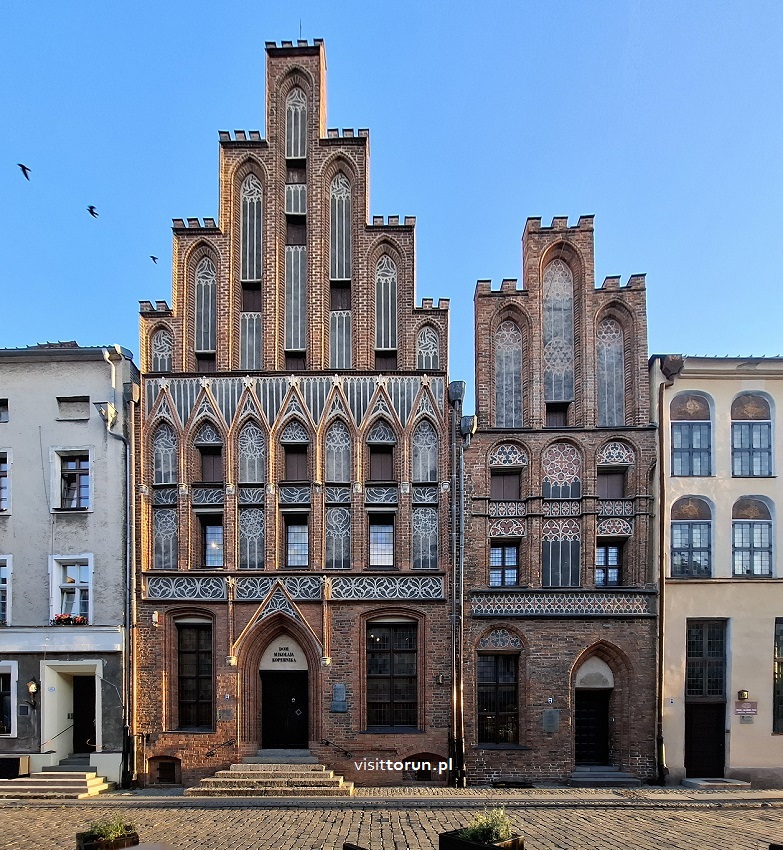
Monument to Nicolaus Copernicus
 |
The construction of the impressive Copernicus Monument in front of the southeast corner of the Old Town Hall in Toruń was initiated by the Council of State of the Duchy of Warsaw, which laid the cornerstone during a session in Toruń in 1809. The project was implemented much later, in 1853. The bronze statue of the astronomer stands on a granite pedestal with a Latin inscription in gold letters, which translates as: "Nicholas Copernicus of Toruń, moved the Earth, held the Sun and the heavens." Dressed in a professorial robe, Copernicus holds an astronomical instrument – an astrolabe – in his left hand. Beneath the pedestal is a well with a dolphin; water flows from the dolphin's mouth, located above the well. The well was built to commemorate Toruń's first waterworks, supposedly installed by Copernicus. In reality, wooden water pipes appeared in the city much earlier, before the mid-14th century. The monument was unveiled in 1853, but its history dates back even further. In 1809, Toruń became the seat of the Council of State of the Duchy of Warsaw, which abandoned Warsaw under siege by the Austrians (read the history of Toruń here). It was the chairman of the Council, Stanisław Staszic, who initiated the construction of the monument and laid the cornerstone. However, political changes and the reincorporation of Toruń into Prussia in 1815 delayed the monument's unveiling. Another initiative came from a German association, which led to the monument's completion.
Guided Tour The Spirit of Copernicus in Toruń |